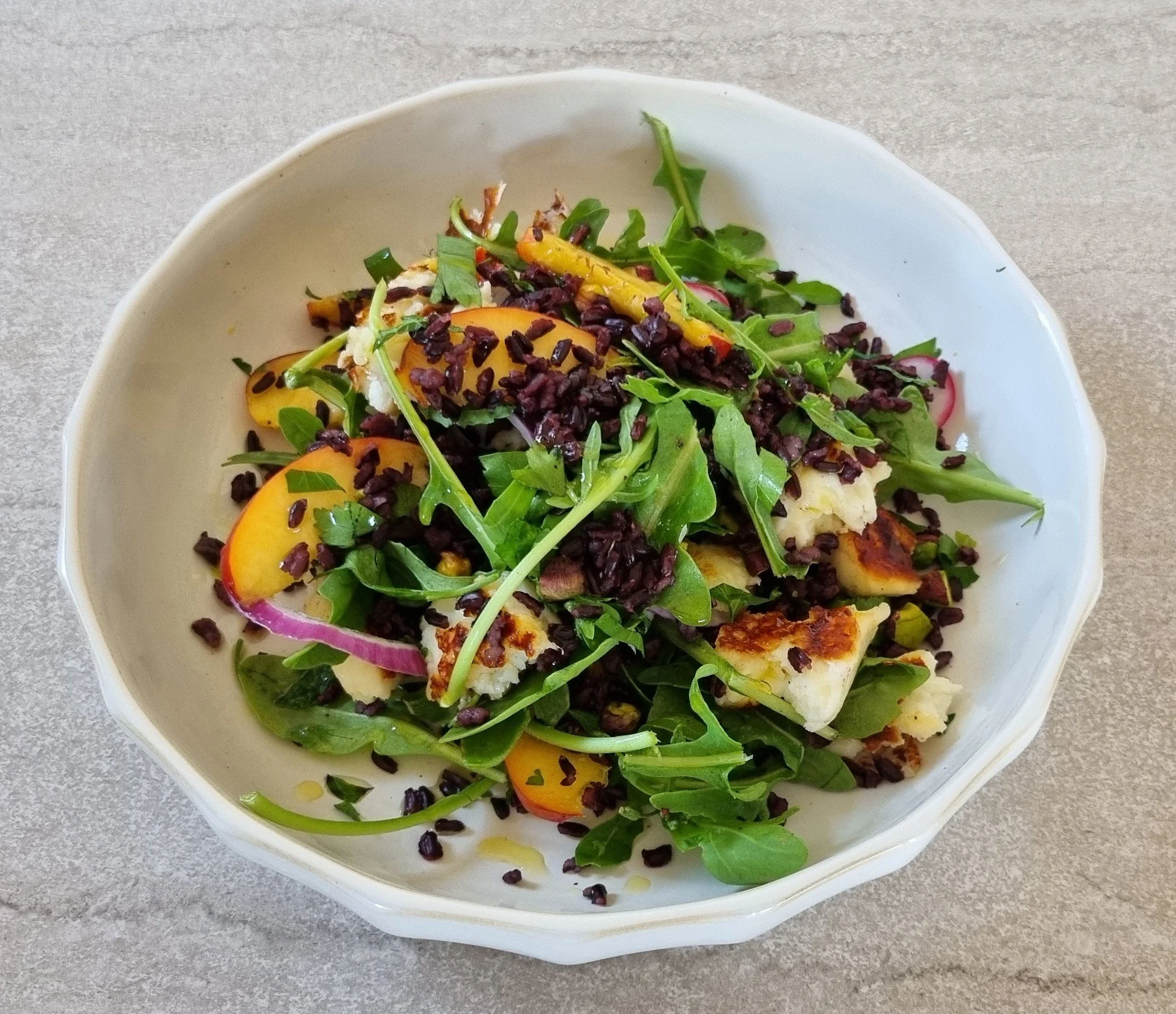
Grilled haloumi, nectarine and black rice salad
This haloumi, nectarine and black rice salad is the kind of dish that feels a little bit special without being complicated. It comes together easily, works just as well for a weeknight dinner as it does for sharing, and delivers that perfect balance of salty, sweet and fresh.
-
(Serves 4)
200g haloumi, sliced into 1cm steaks
4 nectarines, stoned, cut into wedges
4 radishes, thinly sliced
½ small red onion, thinly sliced into rounds
¼ bunch mint, leaves picked
¼ bunch parsley, leaves picked
1 cup rocket leaves
250g packet Microwave Black Rice
⅓ cup pistachios, roughly chopped
Lemon & Tahini dressing:
⅓ cup extra virgin olive oil
¼ cup lemon juice
2 tablespoons tahini
2 teaspoons honey
1 small garlic clove, finely grated
-
Cook the haloumi
Pat haloumi dry with paper towel and slice into 1cm steaks. Heat a large frypan over medium–low heat. Lightly drizzle the haloumi with olive oil, then place into the warm pan. Cook for 2–3 minutes on the first side until golden and just starting to soften, then flip and cook the other side until golden. Remove from the pan, cool slightly, then tear into rustic pieces.
Prepare the rice
Heat the black rice according to packet instructions. Set aside to cool slightly, you want it warm, not hot.
Make the dressing
In a medium bowl, whisk together olive oil, lemon juice, tahini, honey and garlic until smooth. Taste and adjust, a little more lemon for brightness or honey for balance, if needed.
Assemble the salad
In a large bowl, gently toss together nectarines, radish, red onion, mint, parsley, rocket and the warm rice. Drizzle over the dressing just before serving and toss lightly to coat.
To serve
Arrange the salad on a large platter or divide between plates. Top with torn haloumi and finish with chopped pistachios.
-
Snapshot!
This haloumi, nectarine and black rice salad is diabetes-friendly by structure, thanks to a balanced mix of carbohydrates, fibre, protein and fats, even though it’s unapologetically salty.
At 2016kJ per serve, the carbohydrate load sits at 42g, mainly from black rice and fruit, both contributing fibre and slower digestion. With 7g fibre and 18g protein, the meal supports steadier post-meal blood glucose compared to refined or low-fibre options.
The fat profile is largely unsaturated (11g MUFA, 4g PUFA), helping slow gastric emptying and enhance satisfaction, an important part of sustainable, non-restrictive eating.
⚠️ Sodium is the key consideration at 1593mg, largely driven by the haloumi. This makes the dish best enjoyed mindfully as an occasional main, shared plate, or balanced within a lower-sodium day, particularly for those managing blood pressure or kidney health alongside diabetes.
What it means on the plate
This plate works because of smart pairing.
Carbohydrates from black rice and nectarine are supported by protein, fibre and healthy fats, creating a meal that feels satisfying and steady rather than spiky. Haloumi brings richness and crunch, making the salad feel indulgent, while also signalling the need for a little sodium awareness.
Overall, it’s a colourful, crave-worthy salad that delivers balance without feeling like “diet food.”
Food group balance → Grains, fruit, dairy, nuts and vegetables all play a role, showing how variety and structure can support blood glucose management in a real-life plate.
Grains 0.8 serves (black rice)
Vegetables 0.5 serves (rocket, red onion, radish & herbs)
Fruit 1 serve (nectarine)
Protein 0.5 serves (pistachios)
Dairy 1 serve (haloumi)
CWJ Takeaway
Diabetes-friendly eating isn’t about avoiding carbs, it’s about pairing them well. This salad shows how bold flavours, texture and enjoyment can still work with your blood sugars… just keep an eye on the salty stars of the show!